06.04.2026
Employee Spotlight! CAMRIS Biologist Rachel Kazmierski
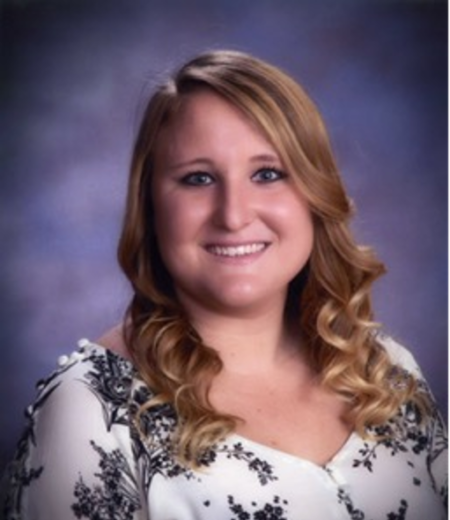
We recently spoke with Rachel Kazmierski, a CAMRIS Biologist supporting the Vaccine Immunology Program’s Automation Group at the National Institute of Allergy and Infectious Diseases (NIAID) Vaccine Research Center (VRC), about her work advancing high-throughput immunoassays, assay qualification, and laboratory automation. In this interview, she shares how her role supports NIAID’s mission, her path into vaccine research, and her advice for those interested in careers in immunology and infectious diseases.
CAMRIS: Please describe your role with the National Institute of Allergy and Infectious Diseases (NIAID).
Rachel: I currently work with the Vaccine Immunology Program as a Biologist in the Automations Group. I plan and carry out high-throughput therapeutic monoclonal antibody pharmacokinetics assays, anti-drug antibody assays, and virus neutralization assays on the Beckman Colter i7 robotic system in accordance with Good Clinical Laboratory Practice (GCLP) guidelines. I maintain mammalian cell lines for our virus neutralization assays. I occasionally develop and modify standard operating procedures (SOPs), assays, and methods on the Beckman Coulter i7. As well as writing and editing SOPs to enhance laboratory and assay procedures. I analyze and interpret data using Excel, GraphPad Prism, Discovery Workbench, and SoftMax Pro from pharmacokinetics assays, anti-drug antibody assays, virus neutralization assays, and Valita Titer IgG assays. I also maintain and operate the Beckman Coulter i7 Robotic System, Cellaca MX Automated Cell Counter, Cellometer Auto 2000 Cell Counter, Molecular Devices Spectrophotometer, and Methodical Mind MSD Plate Reader.
CAMRIS: What does a “typical day” look like for you as a Biologist in the Vaccine Immunology Program (VIP)?
Rachel: A “typical day” at the VIP for me is usually running a lot of assays on our Beckman Coulter i7 robotic system. I run anti-drug antibody assays and pharmacokinetics assays for various ongoing clinical trials. I can test hundreds of patient samples on any given day. My days are spent running these assays and analyzing the data in Excel and GraphPad Prism.
CAMRIS: How does your work in high‑throughput immunoassays and automation support NIAID’s mission and the goals of the Vaccine Research Center (VRC)?
Rachel: The mission of the Vaccine Research Center (VRC) is to discover and develop novel vaccines and biologics targeting infectious diseases of global public health importance. The VRC also aims to apply scientific and technological innovation to the design, development, manufacture, and evaluation of investigational vaccines and antibody-based products.
My work in high-throughput immunoassays and automation directly aligns with the mission of the VRC because we conduct Phase I and II endpoint testing of patients who receive vaccines and assess their responses to these treatments. We use our Beckman Coulter i7 robotic system to perform high-throughput assays, enabling us to test hundreds of patient samples per day compared with manual testing.
CAMRIS: What first sparked your interest in immunology and vaccine research, and how did that interest shape your path to your current role?
Rachel: My love for biology stemmed from my freshman year of high school biology class. From there, I went on to Towson University, where I studied cellular and molecular biology. My first job post-graduation was at the Walter Reed Army Institute of Research (WRAIR), where I conducted Shigella vaccine research for the U.S. Army. This is where I truly found my love and passion for immunology and vaccine research. From that point on, every job I have gotten and pursued has revolved around vaccine research, which led me to my current position at the VRC.
CAMRIS: Can you share one project or assay you are especially proud of supporting at the VRC/VIP, and what made it particularly meaningful or challenging?
Rachel: We have a VRC retreat coming up, and I am presenting a poster on a qualification I completed over the past several months. I am particularly proud of this project because it was my first time working on a qualification of an assay for a new groundbreaking drug product for patients living with HIV. It is really fascinating to see all the moving parts come together and how my work helps sick patients access the immunotherapies they need.
CAMRIS: What advice would you give to current or recent graduates who are interested in building a career in immunology or infectious disease research, especially in clinical trial-focused labs?
Rachel: Some advice I would give to current and recent graduates who want to get into immunology or infectious disease research is to learn to adapt and be flexible. Science is always changing and evolving, and so should your way of thinking and how you approach things.