11.21.2022
Employee Spotlight: CAMRIS Program and Operational Manager Malik Jaffer
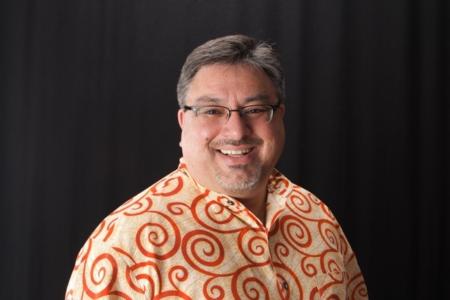
Malik Jaffer is a Program and Operational Manager for CAMRIS. He recently spoke with us about his work supporting the USAID Bureau for Africa, what drove his interest in development, how he incorporates DEI practices into his work, and more.
CAMRIS: Please elaborate on your role in support of the US Agency for International Development (USAID) – Bureau for Africa (AFR).
Malik: I support our work with the Africa Bureau at USAID. We have the mandate to provide both long- and short-term technical assistance. I am responsible for the administrative, operational, and financial matters related to the contract. I also recruit, hire, and manage staff working in various teams within the Bureau. These include support for health, education, economic governance, and the environment. We also support two US Government interagency initiatives, Power Africa and Prosper Africa, and provide technical assistance and support to various USAID Missions on the African continent. All of our efforts support the Africa Bureau’s Mission: “To promote equitable economic growth, open societies to commerce and investment, expand political freedom, further empower women, prevent and mitigate conflict, reduce the spread of HIV/AIDS, secure public health, emphasize education, aid agricultural development, and encourage the sound management of Africa’s natural resources.”
CAMRIS: What drove your career interest in development, and how has your experience prepared you for your current role?
Malik: I started college as a business major and decided that although valuable, it was not the best path for me at the time. I took time and traveled internationally. I recall sitting in a small town in Gilgit-Baltistan, high up in the Karakoram Mountain range in Pakistan. Over the week I spent there, I debated between becoming a physician assistant or going into public health. Ultimately, I decided to take a public health approach to reach more people through policies and structural support while building improved health systems. My experience, including working in a family business, for non-profit and for-profit companies, and with USAID and international NGOs, and my executive experience, has equipped me with the knowledge and skills required to support the project administratively and technically.
CAMRIS: What have you enjoyed working on most with CAMRIS and USAID?
Malik: Without a doubt, the best part of working with CAMRIS and USAID is the people. The quality and caliber of staff and consultants are outstanding. Our team is composed of committed and dedicated individuals with a passion for making life better on the African continent. I feel privileged and humbled to be able to support them in their efforts to uplift people in poverty in Africa.
CAMRIS: You recently earned the Society for Human Resource Management – Senior Certified Professional (SHRM-SCP). How have you applied SHRM practices to your work?
Malik: I have been involved in managing human resources for over 25 years. The field of talent management has evolved, so I wanted to ensure my knowledge and competencies were up to date. I have always held that people are the most critical asset to any company so continually enhancing my skills is important to me. Certainly, I have become more aware of conscious and unconscious biases in the recruitment and management process and better attuned to issues around diversity, equity, and inclusion in the workplace.
CAMRIS: At CAMRIS, we continuously work to create a diverse, equitable, and inclusive (DEI) work environment. How have you incorporated DEI practices into your work?
Malik: As an immigrant born of parents from Africa and Asia, I recognize some of my privileges, which helps me understand conscious and unconscious biases I can avoid in the recruitment and hiring processes. I do not see diversity, equity, inclusion, and accessibility (DEIA) as an activity but rather an ethos of how we are/want to be. With an inclusive lens, diversity follows naturally. The CAMRIS DEIA policy is well articulated and helps drive this ethos. We are fortunate to have hired a diverse workforce under the AFR Institutional and Technical Support Services (ITSS) contract. I believe this strengthens the company and contract and helps make the USAID Mission and Vision come closer to fruition.
CAMRIS: What defines you when you are not advancing development activities?
Malik: In part, I am defined by my faith. One of the principles that I have grown up with is that of Seva. Seva is a Sanskrit word that means selfless service. It is important to me to serve others, share what I can share, and help others have a better life. This may mean calling friends to check on them, volunteering for a food drive, serving on the Parent-Teacher Association (PTA), or donating for disaster relief. Through my travels to more than 50+ countries, I have seen that we are all the same. Nobody minds working hard if they feel their effort is worth it. For those in poverty, I hope to contribute in some way to make their lives a little easier.
CAMRIS: Is there anything else you would like to mention about your work or efforts to help empower individuals and communities through sustainable development?
Malik: We use a lot of phrases and cliches in development. For example, “It is better to teach a man to fish than to give him a fish” or something similar. There are so many assumptions in this statement. First, why a man and not a woman? Second, what if there is no water where we are teaching them how to fish? Did we even ask them if they wanted to fish, or was that just what we wanted to teach? International development solutions from the “west” or the “first world” can miss the mark if we do not listen to those we are trying to serve. Their voices are critical and will often lead us to the best solutions for them. Sometimes these solutions do not align with donor-funded mandates, but at least there can be a conversation and an opportunity to find a middle ground and not just a top-down fishing expedition. The process is harder but requires us to think outside the circle.