06.03.2024
Employee Spotlight! CAMRIS Hazardous Materials/Safety Specialist Brian Walter
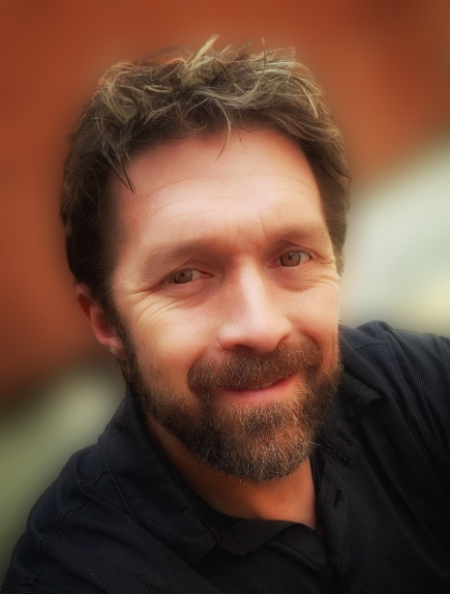
We recently spoke with CAMRIS team member Brian Walter about his work as a Hazardous Materials/Safety Specialist supporting the Naval Medical Research Unit – Dayton (NAMRU-D). In this interview, Brian discusses his role with CAMRIS in support of NAMRU-D, the projects he enjoys working on most, the challenges to reducing hazardous waste, and more.
CAMRIS: Please describe your role with CAMRIS at the Naval Medical Research Unit – Dayton (NAMRU-D).
Brian: My role with CAMRIS while positioned at the Naval Medical Research Unit – Dayton (NAMRU-D), located at the Wright Patterson Air Force Base (WPAFB), is to ensure compliance with all applicable regulations from the U.S. Air Force, Navy, the Environmental Protection Agency (EPA), Occupational Safety and Health Administration (OSHA), and others regarding chemical handling, hazardous waste management, and overall environmental program management and readiness.
CAMRIS: What drove your career interest in environmental studies, and how has your experience prepared you for your current role?
Brian: I have always been fascinated with the natural world and the environment. A career in environmental science or conservation always just felt right.
Every professional opportunity I have had leading up to this role has impacted my current position – from working in the lab as a production chemist to driving corporate safety and sustainability and, of course, the time spent previously at the WPAFB with the Air Force Research Laboratory (AFRL). Every position I have ever held has taught me at least one lesson that I have carried along the way. Whether that is professionalism, diligence, attention to detail, process improvement, or detachment, I have learned much over the years, and I am sure I will take what I learn in this role with me as I advance in my career.
CAMRIS: What projects have you enjoyed working on most at NAMRU-D, or what aspects of your role do you get the most satisfaction from and why?
Brian: We have accomplished a lot in the last 21 months, including having an accurate and complete inventory, improved training, and improvements of critical processes with observable, quantitative controls, and we have passed every inspection by external auditors. But what I have most enjoyed is building a quality program from the ground up. Compliance with any regulations is a team effort, and any successes we have enjoyed have come because of that team. I may be the subject matter expert in my field, but so is our bio-safety officer, the inhalation group team, all the talented project coordinators, and researchers. Everyone has their niche and plays a role; only as a team can we succeed.
CAMRIS: What are some of the greatest challenges one experiences when seeking to reduce hazardous waste, and how have you overcome such challenges?
Brian: This is a great question. The first challenge is to educate people about hazardous waste, what it is, and where it comes from. Ultimately, reducing hazardous waste becomes a multifaceted approach. So, how do we reduce it?
First and foremost, we make sure to classify the waste correctly. We also take the time to accurately track the inventory of hazardous materials on hand and limit excess or unused materials that could become waste. We track expiration dates and use the “first in, first out” principle to minimize waste and maximize the materials we have on hand. Through scheduling, we can minimize the number of experimental runs or schedule similar processes to occur simultaneously. That way, we can reduce waste or the number of containers we produce. Where and when we can, we also substitute non-hazardous or less hazardous materials to replace more hazardous versions in use. The result and overall impact of all the small actions are quite significant.
CAMRIS: What defines you when you are not working?
Brian: The most defining thing about myself is my lust for life and all it holds. Whether fishing on the beach on the outer banks or mountain biking fast, flowy trails wherever I can find them. Life is not something to be fettered away and guarded but to be experienced. Take a hike, go to a concert, eat lunch outside, and let every moment's richness and depth sink in.